
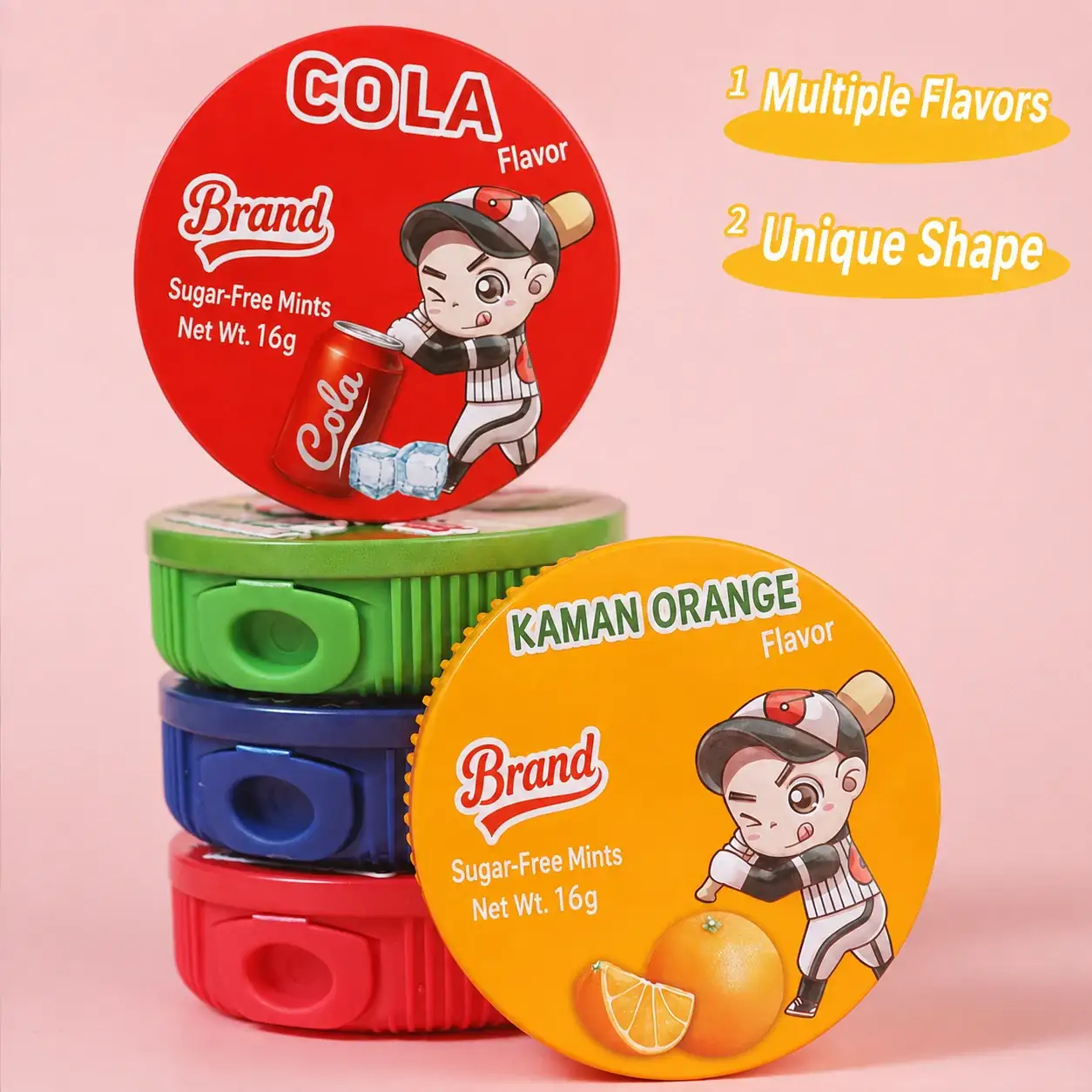
Sugar Free Mint Candy Supplier for Private Label
Develop your mint range with pocket packs, individually wrapped assortments, floral-fruit flavours and ring-shaped formats. We coordinate product selection, sample and packaging discussions with manufacturing partners around your market and brand requirements.
Choose a Mint Format for Your Range
Start with the pack, flavour direction or piece shape that matters to your range. The formats below provide starting points for sample selection; the final specification and availability are agreed for the selected order.
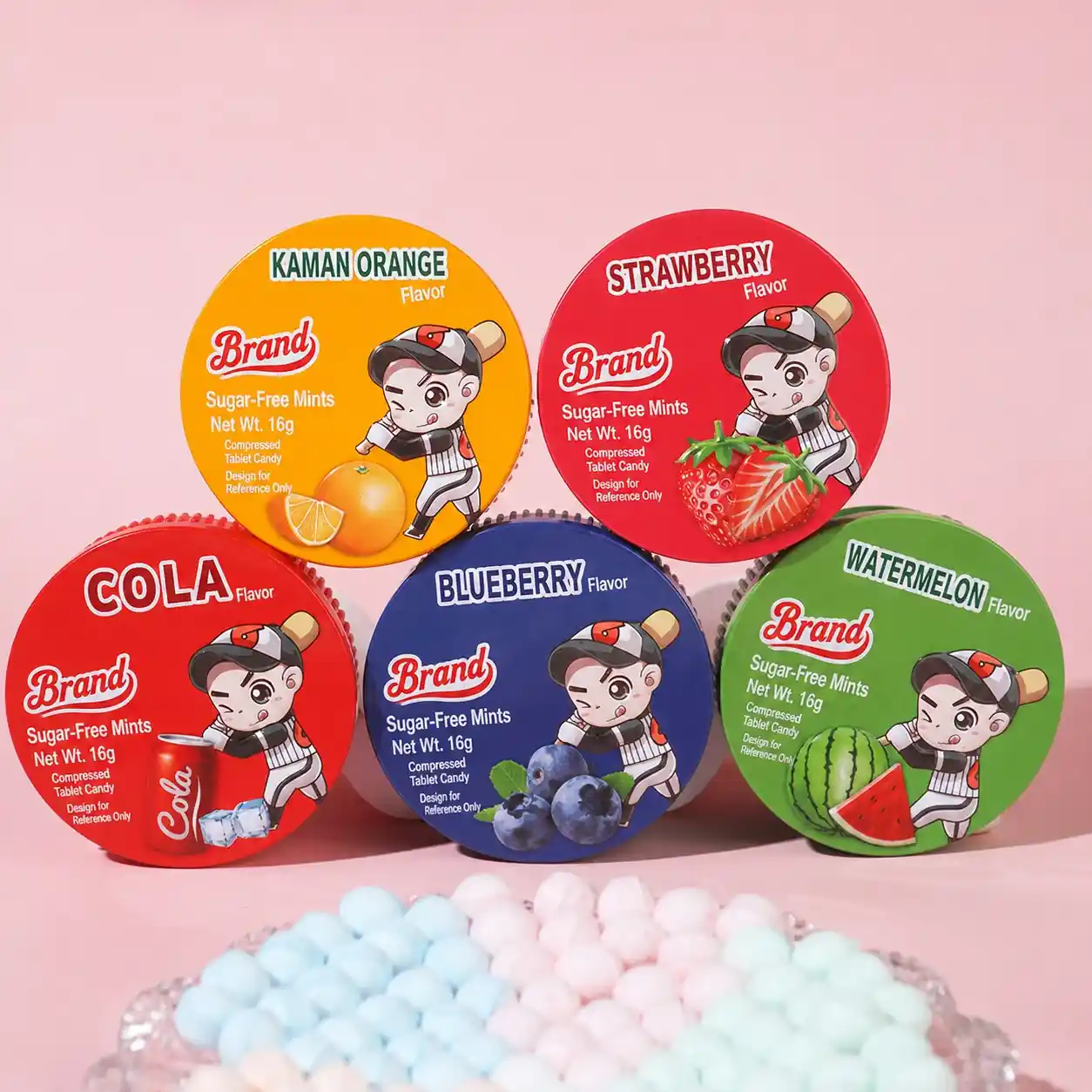
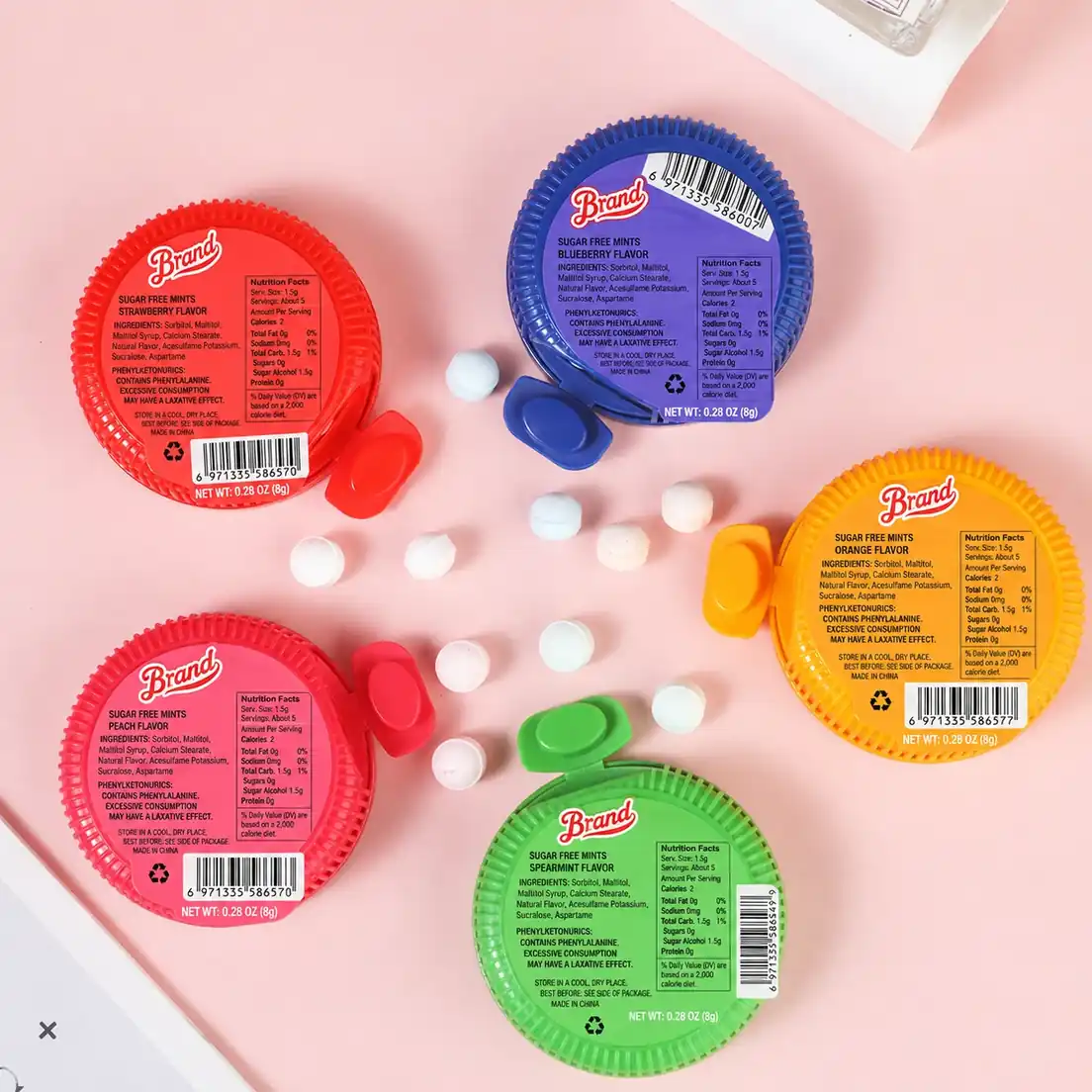
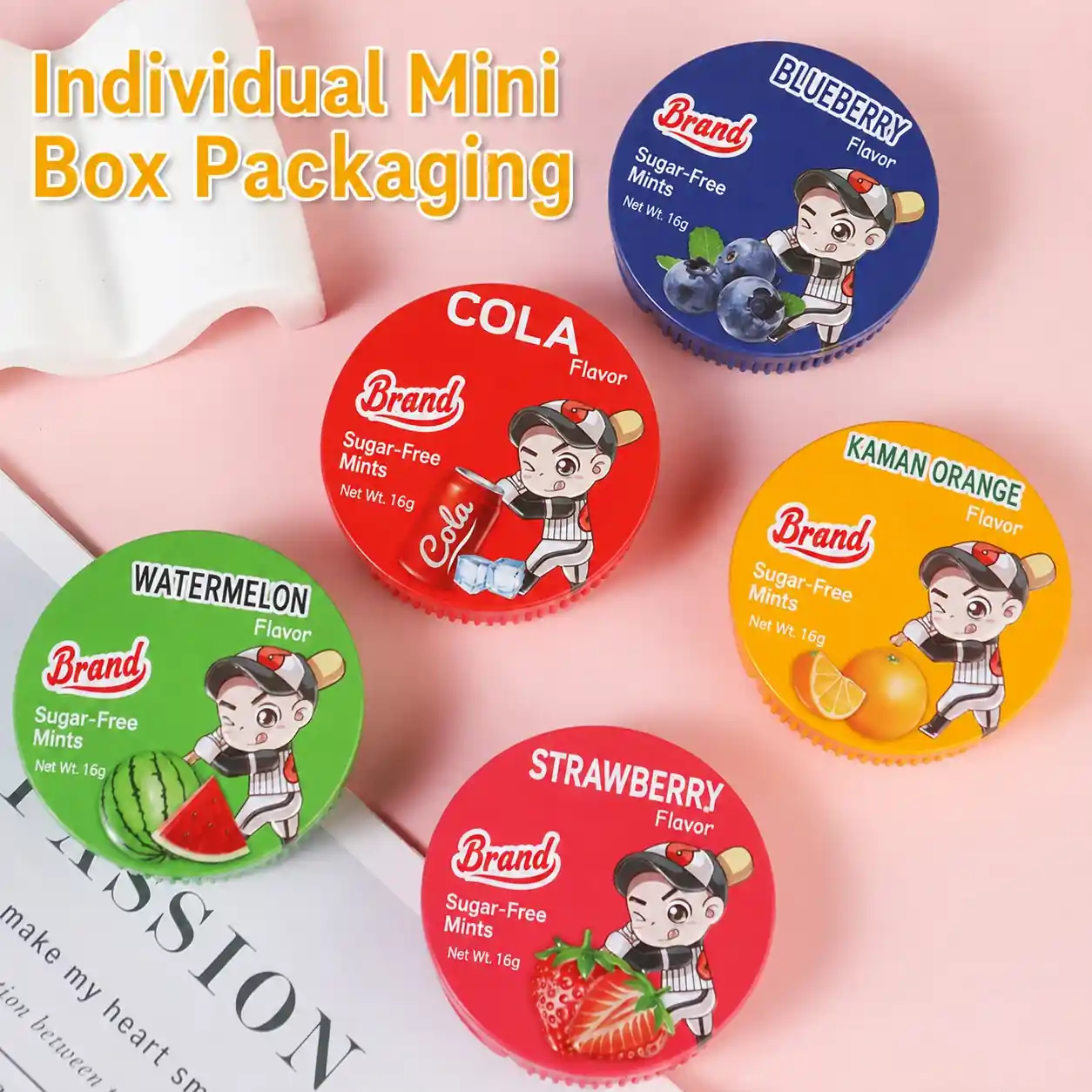
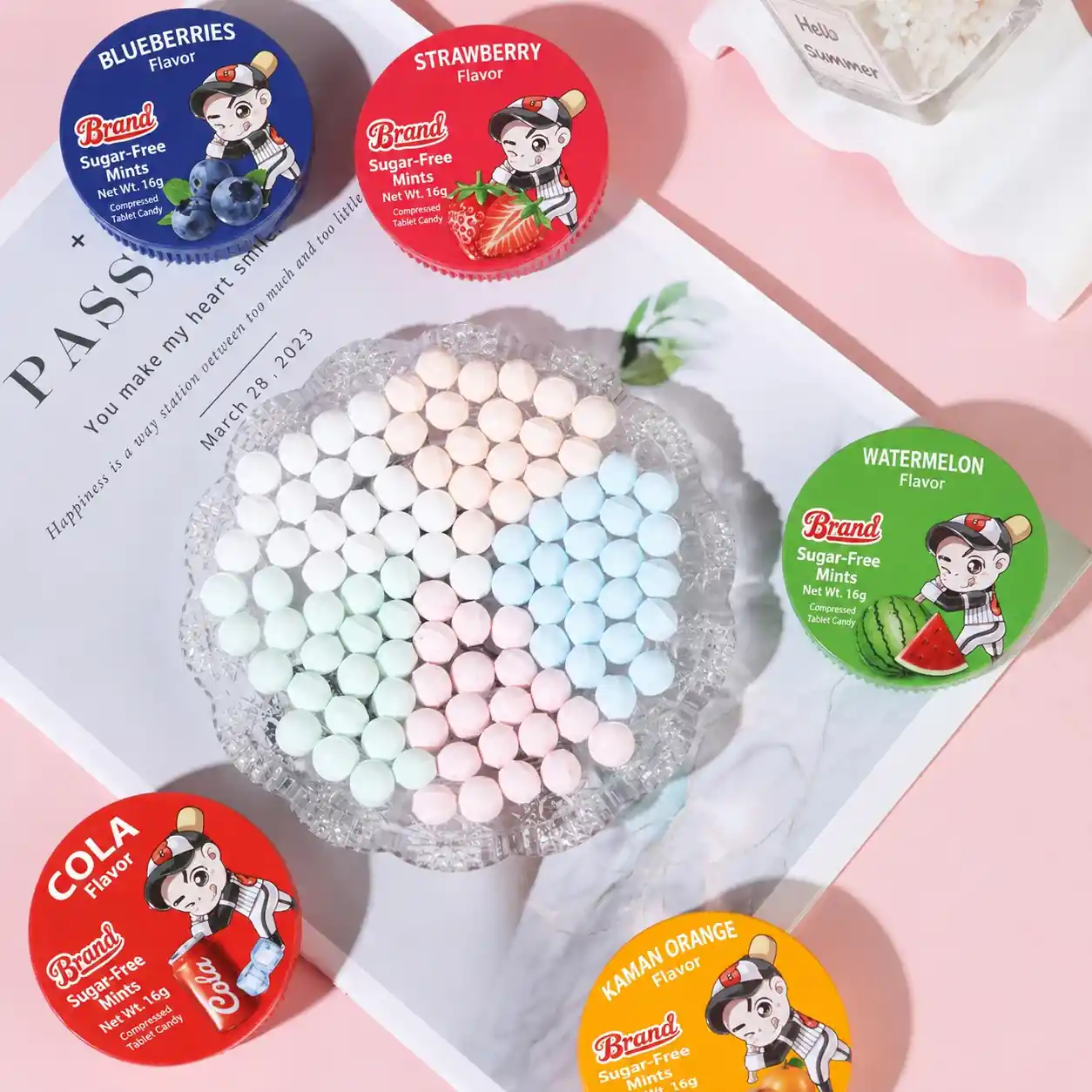
Pocket-Pack Sugar-Free Mints
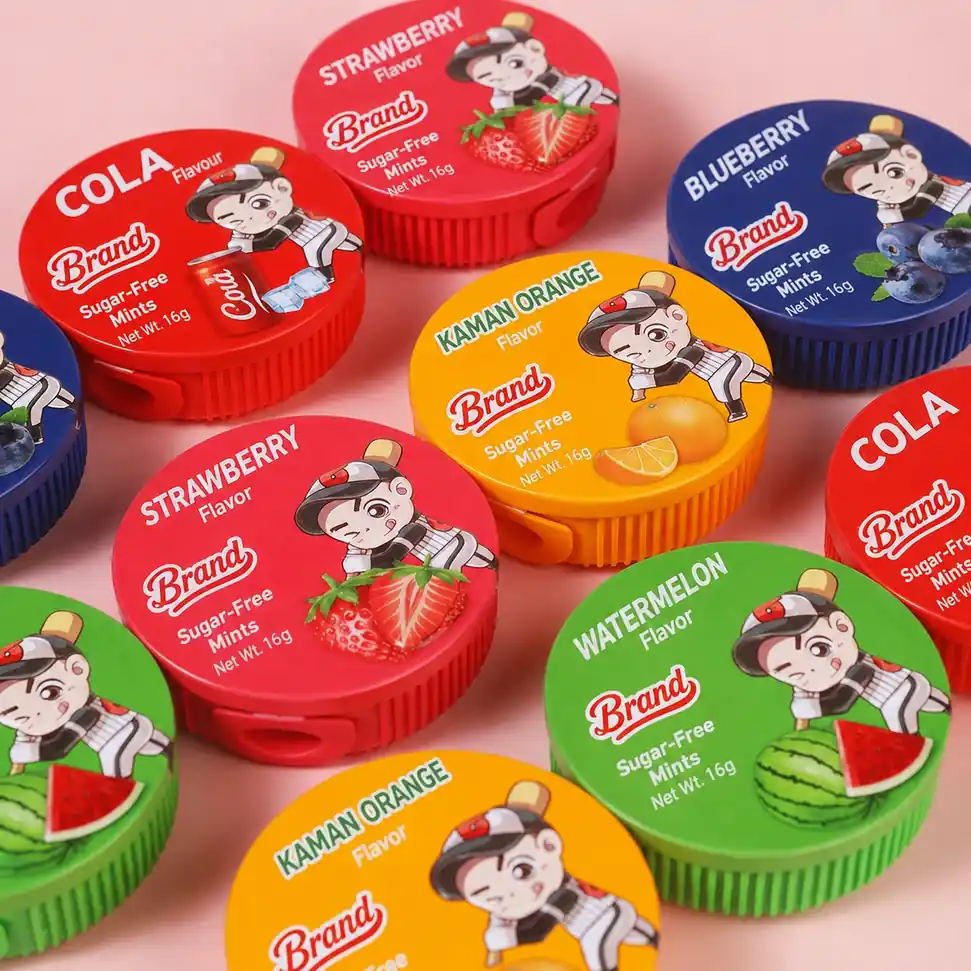
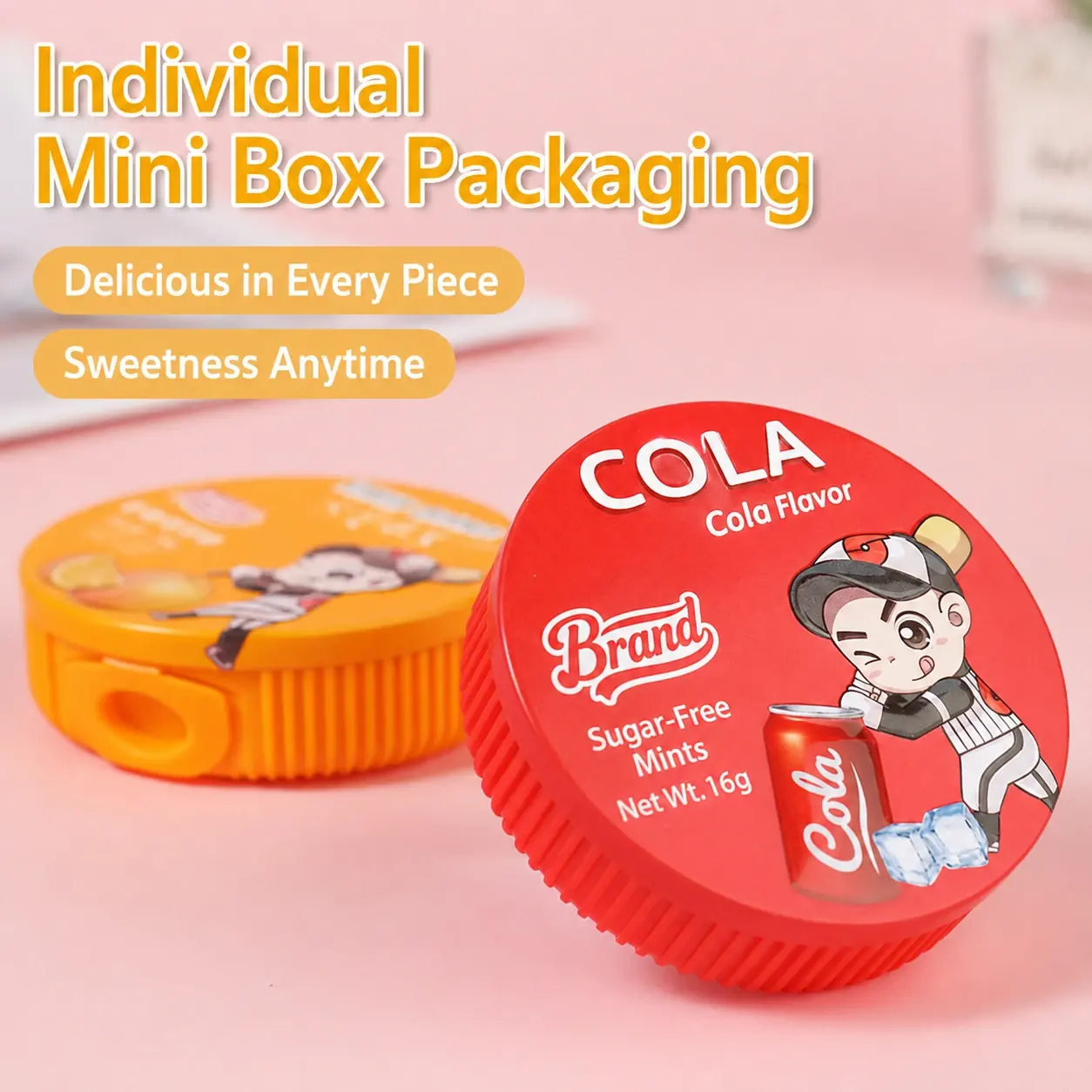
Compact round boxes and sliding tins offer two pocket-pack presentations. Compare the opening mechanism, pack profile and flavour presentation when planning a portable retail mint.
- Round-box and sliding-tin examples
- Compact packs for carrying and retail display
Individually Wrapped Assorted Sugar-Free Mints
Individually wrapped pieces bring multiple flavour directions into a bagged assortment. Review the flavour mix, inner wrappers and outer pack together when selecting a sharing or dispensing format.
- Individually wrapped pieces
- Mixed-flavour assortment planning
Floral & Fruit Sugar-Free Mints
Explore Rose & Lychee, Jasmine & Green Grape, and Roselle & White Peach flavour directions. Individually wrapped pieces give the floral-fruit assortment a different flavour identity from a straight mint profile.
- Three floral-fruit flavour directions
- Individual wrappers within an outer bag
Sugar-Free Mint Rings
A ring-shaped piece gives the mint a recognisable form. Piece dimensions, weight and wrapping are reviewed for the selected ring product rather than borrowed from another mint format.
- Ring-shaped product presentation
- Piece specification and wrapping fit
Match the Pack to How the Mint Will Be Sold
A pocket pack and an individually wrapped assortment solve different presentation needs. Compare the selling unit and handling format before treating two quotations as equivalent.
| Starting Point | Product Presentation | Useful For | Main Selection Trade-Off |
|---|---|---|---|
| Pocket pack | Loose mints in a compact round box or sliding tin; a 20g tin is one example | Portable retail ranges and counter displays | Compare pack opening and label area as well as net weight |
| Wrapped assortment | Individually wrapped pieces in an outer bag | Sharing, dispensing and mixed-flavour ranges | The individual wrapper and outer bag both affect presentation and packaging requirements |
| Floral-fruit assortment | Wrapped floral-fruit pieces; a 500g outer bag is one example | A flavour-led addition to a mint range | A named flavour combination does not by itself establish the ingredients or cooling strength |
| Mint rings | Ring-shaped pieces with the wrapping chosen for the product | A range where the piece shape matters | Piece size, weight and wrapping must be considered together |
Note: The pack weights above describe product examples, not a fixed specification for every order. A mixed-flavour assortment can also use ring-shaped pieces.
Choose the Flavour Experience Before Finalising the Pack
A Stronger Mint Is Not Always the Better Fit
Mint intensity, sweetness, acidity and aftertaste contribute different parts of the eating experience. A floral-fruit name alone does not tell you how strongly the mint will cool. We coordinate flavour and sample discussions so you can compare the proposed product against the profile you want.
Compare the Same Product and Selling Unit
A quote per bag cannot be compared directly with a quote per pocket tin. Match the candy specification, net weight, inner wrapping and branded components before comparing the commercial offer. We bring these product and packaging details into the same project discussion.
| What to Compare | What to Observe | Why It Matters |
|---|---|---|
| Mint and cooling profile | Initial intensity, how it develops, and the sensation after the piece has dissolved | Helps distinguish a sharp mint profile from a gentler-tasting option |
| Sweetness and aftertaste | Sweetness balance, lingering flavour and any unwanted aftertaste | Helps judge whether the complete sweetener and flavour system fits the range |
| Piece experience | Size, shape, surface feel and how the piece dissolves | Ring-shaped and other mint pieces should be assessed on their own specification |
| Pack handling | Opening, dispensing, individual wrapping and outer-pack presentation | Helps check that the packaging suits the way the product will be sold and handled |
Record flavour persistence under the same sampling conditions. A longer-lasting flavour claim needs a defined comparison; a product name or review score is not enough.
Product, Packaging and Private Label in One Project Brief
Yunfan brings mint selection, packaging and manufacturing-partner discussions under one commercial contact. We coordinate the requirements around the selected product so the sample, artwork and order discussions follow the same brief.
One Commercial Contact
Keep product interests, branding requirements and order discussions together while we coordinate with the relevant manufacturing partner.
Product and Packaging Considered Together
Flavour, piece format, net weight, inner wrapping and printed components are considered as a connected product choice. This gives sample and artwork reviews a common starting point.
Manufacturer and Order Requirements Matched
The selected product is linked to its responsible manufacturer. Quantities, inspection requirements and delivery handovers are agreed for the order rather than assumed across different factories or formats.
Manufacturing Partners & Food Safety Credentials
We coordinate product and order requirements with the manufacturing partner responsible for the selected mint. Manufacturer identity, production site and certificate scope are considered together when reviewing a supply project.
SHANTOU CITY FUMEIDUO FOOD CO., LTD.
The credentials shown below relate to this manufacturing partner and the production of tablet candy within the licensed scope at its stated second- and fifth-floor production premises in Shantou, Guangdong.
| Credential | Certificate Number | Certificate Term |
|---|---|---|
| ISO 22000:2018 Food Safety Management System | 007FSMS2500087 | 15 April 2025 – 14 April 2028 |
| HACCP System Certification | 007HACCP2500068 | 15 April 2025 – 14 April 2028 |
Note: These are credentials of the named manufacturing partner. The applicable manufacturer and product scope are matched to each selected SKU.


Sugar-Free Mint Buying Guide
Compare the complete product, not just the sugar-free wording. These answers connect sweetener and label choices with the mint formats, flavour discussions and packaging options above.
Contents
Which Sweeteners Should I Look for in Sugar-Free Mints?
Start with the full ingredient list. Sugar-free mints may use sugar alcohols, high-intensity sweeteners or a combination; a highlighted ingredient does not describe the entire recipe.
| Sweetener Approach | Examples Used in Confectionery | What the Difference Means |
|---|---|---|
| Sugar alcohols, also called polyols | Sorbitol, isomalt, maltitol or xylitol | Can provide sweetness and bulk; compare the complete product's nutrition and eating experience |
| High-intensity sweeteners | Sucralose or acesulfame potassium | Used in small amounts for sweetness and may be combined with other sweeteners |
| Combined system | More than one sweetener in the same recipe | Assess the complete formula rather than treating one named ingredient as the whole product |
The sweetener system is product-specific. We review ingredient requirements with the proposed manufacturer alongside the sample and proposed label.
FDA: Sweeteners in FoodCan I Specify Natural Sweeteners or No Artificial Ingredients?
Yes, you can include ingredient requirements in the project brief, but feasibility depends on the complete formula. Identify the sweeteners, flavours, colours or other ingredients you want to include or exclude instead of relying on a broad natural description.
A natural-flavour statement does not establish that every ingredient is natural. Our floral-fruit flavour names describe flavour directions; they do not establish the use of natural flower extracts or an artificial-ingredient-free recipe.
FDA: Types of Food Ingredients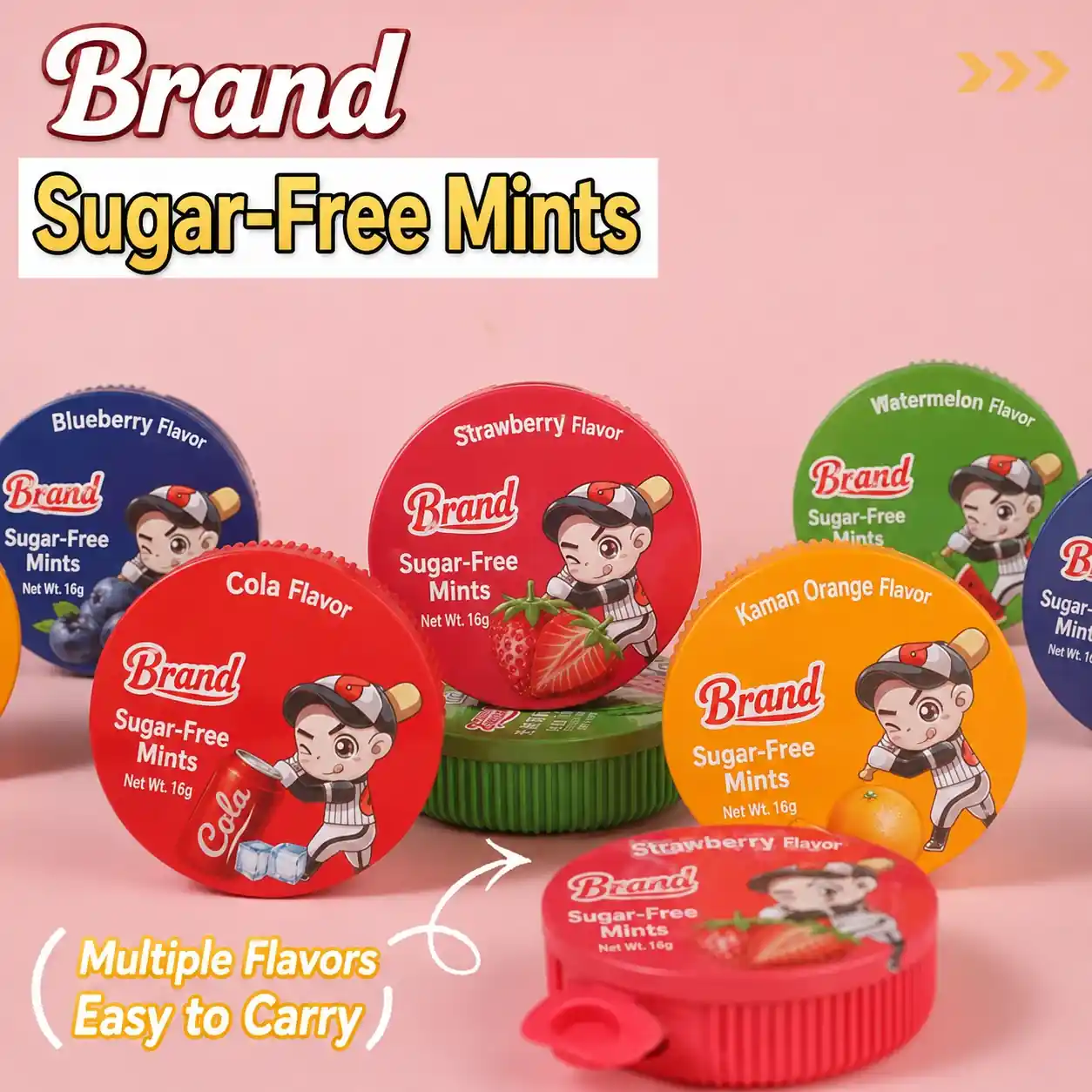
How Many Calories Do Sugar-Free Mints Contain?
There is no single calorie count for the category. Sugar-free products can still contain calories and carbohydrate. Compare the nutrition panel for the exact SKU and check whether the values are per piece, per serving or per 100g before comparing products.
For a pocket tin or wrapped assortment, net pack weight is a separate figure from the nutrition serving size. Use the selected product's approved nutrition information when developing the retail label.
FDA: Sugar Alcohols and the Nutrition Facts LabelDoes Sugar-Free Automatically Mean Keto-Friendly or Suitable for Diabetes?
No. Sugar-free wording alone does not establish either kind of suitability. The exact formula, total carbohydrate and serving size matter; the same conclusion cannot be applied to every pocket pack, floral-fruit assortment or ring-shaped mint.
For medically managed diets, individual suitability should be discussed with a healthcare professional. Any proposed diet claim needs to be assessed for the selected product and destination market.
CDC: Carbohydrate CountingCan Sugar-Free Mints Cause Digestive Discomfort?
Some sugar alcohols can cause gas, bloating or diarrhoea in some people. The amount consumed and individual tolerance matter. A natural-sounding sweetener name does not establish digestive tolerance. Review the selected formula, serving information and any relevant consumption wording when preparing the label.
FDA: Sugar Alcohols and the Nutrition Facts LabelHow Can I Choose a Gentler Mint or Compare Flavour Persistence?
Use the same sample-review conditions to compare cooling, sweetness, acidity, aftertaste and flavour persistence. The strongest initial cooling sensation is not necessarily the profile you want for your range, and a floral-fruit name does not guarantee a milder mint.
Rose & Lychee, Jasmine & Green Grape and Roselle & White Peach give three flavour directions for discussion. Compare the actual samples using the mint sample review above rather than choosing by pack colour or an unsupported longest-lasting claim.
Are Sugar-Free Mints an Oral-Hygiene Product?
A mint can provide a temporary fresh-tasting sensation, but that is different from a proven dental benefit. These mint products do not replace brushing, flossing or dental care. Any specific oral-health claim needs evidence for the exact product and its intended use.
Texas A&M Dentistry: Understanding Breath FreshenersHow Do I Source Sugar-Free Mints in Bulk or Under My Own Brand?
Choose a product direction first, then define the selling unit and expected quantity. We coordinate the product, sample, packaging and manufacturing-partner discussion around that brief.
- Mint format and flavour direction
- Estimated quantity, with the unit stated clearly
- Target country or region and intended sales channel
- Pack format, net weight and branding requirements
- Specific ingredient requirements and project timing
MOQ and production arrangements vary with the selected product, formulation and packaging materials. Bulk pricing and delivery planning follow the agreed project scope.
Plan Your Sugar-Free Mint Project with Yunfan
Share the mint format, flavour direction and packaging you have in mind, together with your target market and estimated quantity. We will use these details to start the product, sample and manufacturing-partner discussion.